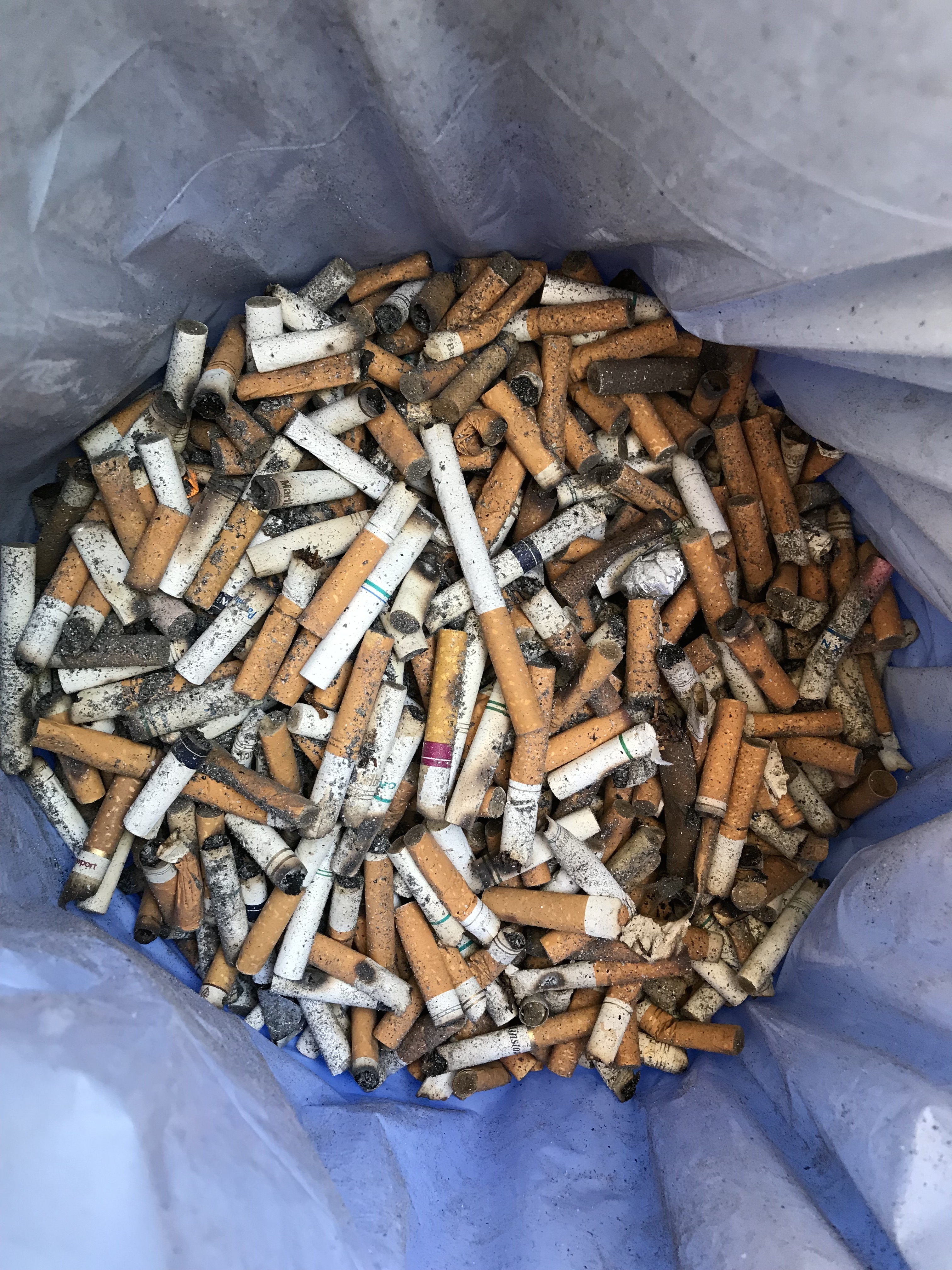
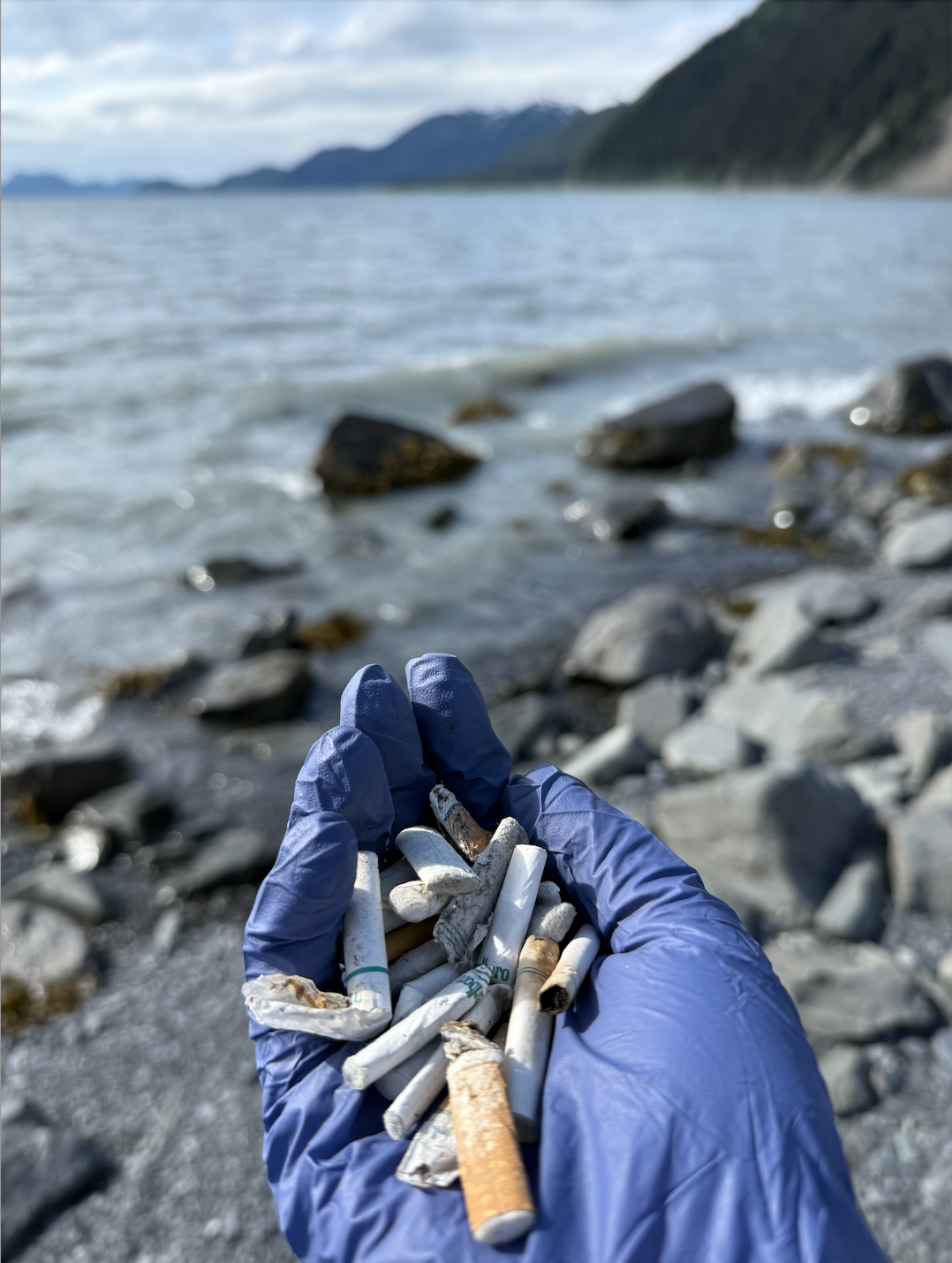
Cigarette butts are the most littered item in the world, including the Kenai Peninsula.
What's the Big Deal?
Cigarette butt litter is a major problem at our beaches, in Kachemak Bay and throughout the ocean. Cigarette butts discarded in parking lots on the Spit, along sidewalks and in street gutters miles from the coast inevitably make their way through storm drains, creeks and rivers to the beach and the ocean. Direct litter of cigarette butts at the beach adds to the problem. It isn't just a matter of unsightly trash and litter. Toxins, toxic chemicals, and carcinogens from cigarettes collect on the filter and are then washed out into our waterways and the ocean. Birds and sea mammals ingest these toxic butts, misinterpreting them for food.
Alaska's ocean, waves and beaches are everything. Let’s save them.
In a study performed by Elli Slaughter of San Diego State University, when a single cigarette butt that had traces of tobacco was introduced to a liter of water, the exposure resulted in high toxicity levels, and the death of 50% of the fish in the water. This is the result of one little cigarette butt. In Homer, we all know the importance of a healthy fish population.
Why care?
1. Cigarette butts are the #1 littered item in the world.
Cigarette butts are consistently at the top of the International Coastal Cleanup (ICC) Top 10 list both globally and in the U.S. In 2019, ICC participants around the world picked up 5,716,331 butts, outpacing bottle caps, food wrappers, plastics bags, and straws.[3]
2. Butts are not biodegradable.
Cigarette butts are not biodegradable, and a study found that a cigarette butt was only 38% decomposed after two years.[1]
3. Cigarette litter is unsafe for animals and humans alike.
Plastic cigarette filers have been found in the stomachs of fish, birds, whales, and other marine creatures that mistake them as food, swallowing both the harmful plastic and associated toxic chemicals. Sometimes even young children pick up and ingest cigarette butts.
4. Cigarette butts are expensive to clean.
Researchers from San Diego State University and Avalon Economics estimate handling tobacco waste products from cigarette butts to e-cigarette cartridges could cost taxpayers as much as $90,000,000 a year.
6. Butts negatively effect water quality (and fish health!)
In a study performed by Elli Slaughter of San Diego State University, when a single cigarette butt that had traces of tobacco was introduced to a liter of water, the exposure resulted in high toxicity levels, and the death of 50% of the fish in the water. This is the result of one little cigarette butt.